825 N Killingsworth St, Portland, OR 97217, USinfo@layerswapfieldbook.com
LIVE REMIX STEMS JOURNAL•ISSUE 2026
TECHNICAL DISPATCH // EDITORIAL ARCHIVE

CHOREOGRAPHING 4-DECK LAYER TRANSITIONS

Multi-Channel Stem Allocation, Frequency Headroom Arbitration, and Continuous Dancefloor Momentum

October 6, 2026 Sora Takahashi 9 MIN READ FIELDBOOK ARTICLES
Choreographing 4-Deck Layer Transitions
PRIMARY CASE OVERVIEW

DECONSTRUCTING 4-DECK STEM ROUTING

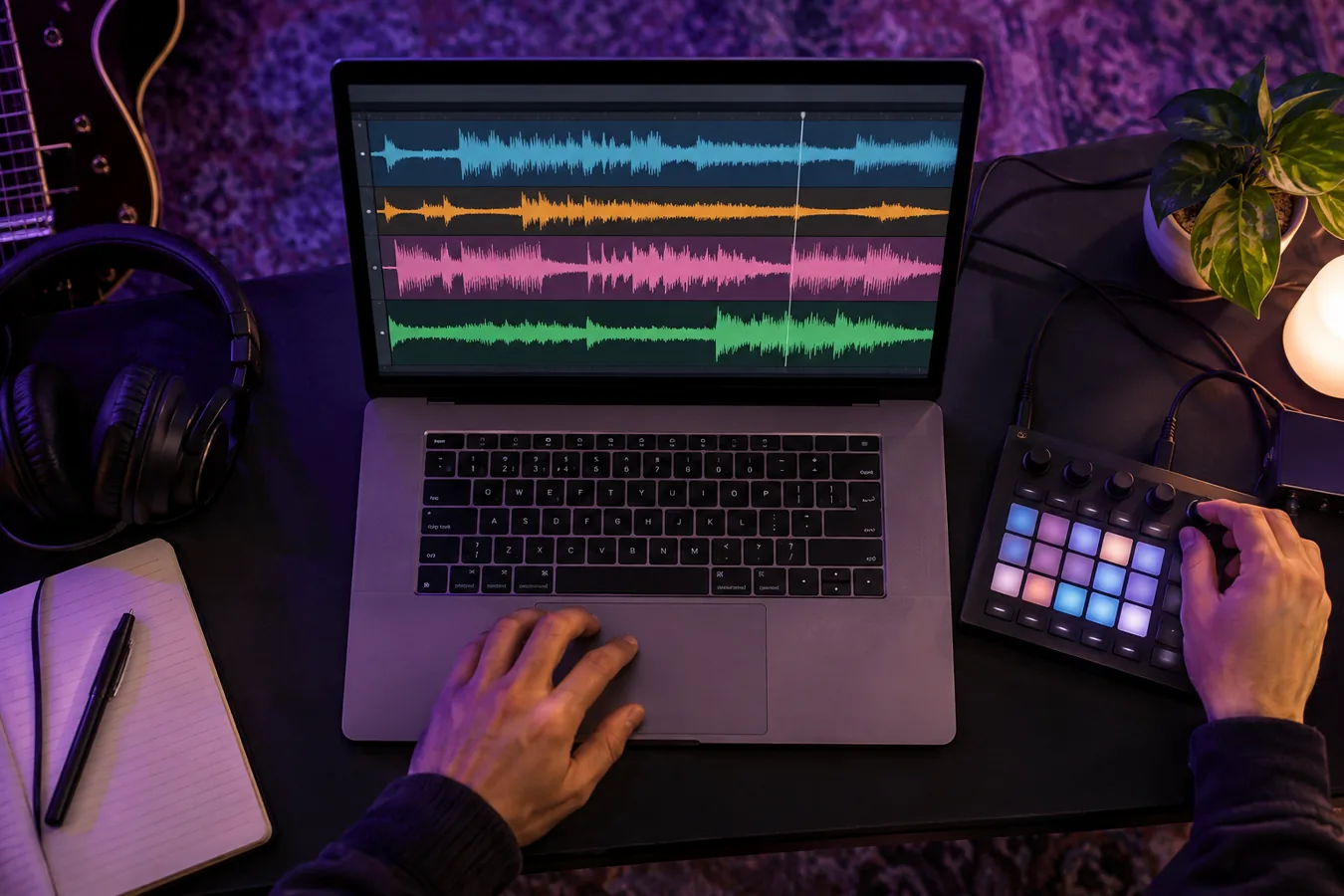
Operating four live decks simultaneously with real-time stem separation creates unprecedented sonic potential alongside severe risks of acoustic clutter. Balancing four stereo sources requires treating each deck not as an individual track, but as a modular bank of isolated acoustic elements: lead vocals, rhythmic percussion, harmonic beds, and bass foundations.

STEM MASKING BANDPASS CROSS FIELDBOOK ARTICLES
ANALYSIS REPOSITORY Explore Engineering Stems
READ ANALYSIS
FREQUENCY TOPOLOGY

ARCHITECTING FREQUENCY HEADROOM ACROSS QUADRUPLE DECKS

When spreading four stereo channels across a multi-channel mixer, summing unmanaged stems quickly saturates the master bus limiter. In traditional two-deck mixing, alternating kick drums and basslines is straightforward. With four active sources, the acoustic real estate demands surgical isolation: Deck A supplies the drum groove, Deck B provides chordal pads, Deck C introduces a foreign vocal hook, and Deck D buffers an incoming breakdown. Maintaining transparent loudness requires strict dynamic ducking and complementary bandpass isolation, ensuring no two overlapping decks occupy the same critical frequency corridor simultaneously.

RHYTHMIC CONTINUITY AND ISOLATION STAGING

The most vulnerable element during complex four-deck transitions is rhythmic continuity. Muting drum stems across two outgoing tracks while advancing an incoming loop requires synchronized timing down to the quarter beat. Phase cancellation between two competing snare stems or doubled percussive shakers degrades transient snap faster than standard EQ attenuation can rescue it. Assigning primary rhythmic authority to a single deck while reducing secondary percussion layers to isolated mid-frequency textures preserves punch while keeping the low-frequency foundation uncompromised.

Core Engineering Takeaways

  • Single Subwoofer Anchor: Designate only one active bass stem across all four decks to eliminate low-frequency phase cancellation.
  • Vocal Isolation Purity: Never allow vocal stems from separate decks to overlap without hard high-pass filtering and sidechain ducking.
  • Staggered Stem Entry: Introduce incoming decks one stem component at a time across consecutive 16-bar phrasing boundaries.
A four-deck transition is not a race to layer four songs together; it is an active live remix where each channel surrenders three stems so one clear musical voice can lead.
— Sora Takahashi, Senior Performance Editor
AUTHORED BY

Sora Takahashi

Senior Performance Editor & Electronic Music Technologist

Sora Takahashi specializes in multi-deck digital performance systems, real-time audio separation workflows, and advanced DJ mixing architectures with over twelve years of club and festival residency experience.

TECHNICAL SPECIFICATIONS

FREQUENTLY ASKED QUESTIONS

You prevent clipping by enforcing a strict stem-budgeting rule: at any given moment, no more than four total stems should be active across all four decks. If Deck 1 has drums and bass active, Decks 2 and 3 should only contribute isolated vocals or harmonic elements, while Deck 4 remains muted in pre-fader preview.

Pre-cueing isolated stems rather than the master stereo output is essential. Split your headphone cueing to audition only the melodic or vocal stem of the incoming deck against the active master percussion. This ensures harmonic compatibility before unmuting on the main sound system.

High-performance laptops equipped with modern multicore processors handle multi-deck stem processing smoothly provided neural network analysis is completed ahead of time in your performance crates. Pre-analyzing files prevents on-the-fly rendering bottlenecks during live quad-deck sets.
COMMUNITY PEER REVIEW

ANALYSIS THREADS

No comments yet. Be the first to leave an analysis comment.

SUBMIT PEER FEEDBACK